Buy affiliator.com ?
We are moving the project
affiliator.com .
Are you interested in purchasing the domain
affiliator.com ?
domain@kv-gmbh.de · 0541-91531010
Buy affiliator.com ?
What are math coefficients?
Math coefficients are the numerical factors that are multiplied by variables in algebraic expressions or equations. They represent the scale or magnitude of the variable in the expression. For example, in the expression 3x + 5, the coefficient of x is 3. Coefficients are important in understanding the behavior and relationships between variables in mathematical equations and expressions. **
What are coefficients in chemistry?
In chemistry, coefficients are the numbers placed in front of chemical formulas in a balanced chemical equation. These coefficients represent the ratio of moles of each substance involved in the reaction. Coefficients are used to balance chemical equations by ensuring that the number of atoms of each element is the same on both sides of the equation. They help in determining the stoichiometry of a reaction, which is the quantitative relationship between reactants and products in a chemical reaction. **

Similar search terms for Coefficients
Top-Angebote
Products related to Coefficients:
-
Coach House Partners Spitfire Metal Construction SetCelebrate one of Britain’s most iconic aircraft with the Coach House Partners Spitfire Metal Construction Set. Designed as a detailed, hands‑on build, this model pays tribute to the legendary Spitfire, a symbol of British engineering and aviation history. With 285 precision metal components, this construction set offers a rewarding build that balances challenge with clarity. Clear, colour step‑by‑step instructions guide you through the process, while the included specialist tools ensure everything you need is close at hand. Once complete, the finished model makes an impressive display piece, showcasing the distinctive shape and presence of the original aircraft. Ideal for teenagers and adults alike, this set encourages patience, problem‑solving and practical engineering skills. Expect a build time of around three to five hours, making it a satisfying project rather than a quick assembly. Finished model dimensions: 11(H) x 40(W) x 35(D) cm. Recommended age: 12+ (parental guidance advised).24,99 £*Shipping: 3,50 £Secure redirect to the provider
-
Coach House Partners Concorde Metal Construction SetRecreate one of the most extraordinary achievements in aviation history with the Coach House Partners Concorde Metal Construction Set. Developed in association with Brooklands Museum, Weybridge, this detailed model represents British Airways Concorde G‑BBDG, which took its maiden flight in February 1974. Concorde was a British‑French turbojet aircraft capable of flying at over twice the speed of sound, transforming long‑distance travel by cutting transatlantic flight times to just a few hours. This construction set captures the sleek proportions and distinctive design that made Concorde an enduring symbol of innovation and luxury air travel. Comprising 269 precision‑engineered stainless‑steel pieces, the set offers a challenging and rewarding build for those who enjoy detailed modelling projects. Clear, colour step‑by‑step instructions guide the process, while the included specialist tools ensure everything needed is ready to use. With an estimated build time of five to seven hours, this is a satisfying project that results in an impressive display model. Designed for teenagers and adults, the set also supports the development of fine motor skills, patience and basic mechanical understanding. Parental guidance is recommended. Finished model dimensions: 14(H) x 24(W) x 52(D) cm. Recommended age: 12+.24,99 £*Shipping: 3,50 £Secure redirect to the provider
-
Coach House Partners Tractor Metal Construction SetRecreate a familiar sight from rural life with the Coach House Partners Tractor Metal Construction Set. This detailed model celebrates the enduring role of the tractor in farming and agriculture, capturing the practical design and robust character of this essential working vehicle. The set includes 295 precision‑engineered stainless‑steel pieces, with the main body finished in a traditional green colour for an authentic appearance. Clear, colour step‑by‑step instructions guide you through the build, while the included specialist tools ensure everything needed is ready to use from the outset. Once completed, the model makes a compact and characterful display piece. With an estimated build time of two to four hours, this construction set offers a satisfying hands‑on project for teenagers and adults who enjoy detailed modelling. It also supports fine motor skills, patience and basic mechanical understanding. Parental guidance is recommended. Finished model dimensions: 12(H) x 12.8(W) x 29(D) cm. Recommended age: 12+.24,99 £*Shipping: 3,50 £Secure redirect to the provider
-
Coach House Partners Army Jeep Metal Construction SetRecreate a cornerstone of military vehicle history with the Coach House Partners Army Jeep Metal Construction Set. Based on the original Willys Army Jeep, this model pays tribute to the four‑wheel‑drive utility vehicle produced between 1941 and 1945, with over 600,000 built to support Allied forces during the Second World War. This detailed construction set includes 392 precision‑engineered stainless‑steel pieces, with the main body finished in a traditional green colour for an authentic appearance. Clear, colour step‑by‑step instructions guide the build, while the included specialist tools ensure everything required is ready to use from the outset. Once complete, the model captures the rugged proportions and practical design that made the Army Jeep so effective. With an estimated build time of three to five hours, the set offers a rewarding hands‑on project for teenagers and adults who enjoy detailed modelling. It also supports fine motor skills, patience and basic mechanical understanding. Parental guidance is recommended. Finished model dimensions: 11(H) x 13(W) x 26(D) cm. Recommended age: 12+.24,99 £*Shipping: 3,50 £Secure redirect to the provider




-
How are extinction coefficients calculated?
Extinction coefficients are calculated by measuring the absorbance of a substance at a specific wavelength using a spectrophotometer. The absorbance value is then used in the Beer-Lambert law equation, A = εlc, where A is the absorbance, ε is the extinction coefficient, l is the path length of the sample, and c is the concentration of the substance. By rearranging the equation, the extinction coefficient (ε) can be calculated by dividing the absorbance (A) by the product of the path length (l) and concentration (c) of the substance. **
-
How do you determine the coefficients?
The coefficients in a mathematical equation are determined through a process called regression analysis. This involves using statistical techniques to find the best-fitting line or curve that represents the relationship between the variables in the equation. The coefficients are then calculated based on the data points and the specific regression model being used, such as linear regression or polynomial regression. The goal is to find the coefficients that minimize the difference between the predicted values from the model and the actual observed values in the data. **
-
How do I determine the coefficients?
To determine the coefficients in a mathematical equation, you can use various methods depending on the type of equation. For linear equations, you can use the method of substitution or elimination to solve for the coefficients. For quadratic equations, you can use the method of completing the square or the quadratic formula to find the coefficients. In general, you can also use regression analysis or curve fitting techniques to determine the coefficients in a more complex equation. **
-
How do you calculate the extinction coefficients?
The extinction coefficient, also known as molar absorptivity, is calculated using the Beer-Lambert law, which relates the absorbance of a substance to its concentration and the path length of the sample. The formula for calculating the extinction coefficient is ε = A / (c * l), where ε is the extinction coefficient, A is the absorbance, c is the concentration, and l is the path length. By measuring the absorbance of a known concentration of the substance at a specific path length, the extinction coefficient can be determined. This value is important for quantifying the concentration of a substance in a solution using spectrophotometry. **


What is the problem with the coefficients?
The problem with the coefficients is that they can be sensitive to the scale of the input variables. This means that if the input variables are on different scales, the coefficients may not accurately represent the true relationship between the variables and the target. Additionally, coefficients can be difficult to interpret when the input variables are not standardized, making it challenging to compare the impact of different variables on the target. Standardizing the input variables can help address these issues by putting them on the same scale and making the coefficients more interpretable and comparable. **
How do you get to the coefficients here?
To get the coefficients in a linear regression model, we use a method called ordinary least squares (OLS). This method minimizes the sum of the squared differences between the observed values and the values predicted by the model. By minimizing this sum, we can find the coefficients that best fit the data. The coefficients represent the relationship between the independent variables and the dependent variable in the model. **
Top-Angebote
Products related to Coefficients:
-
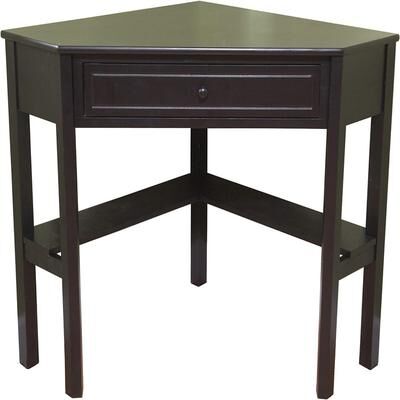
No Marketing Systems Wood Corner Desk"The corner desk measures 42"" X 28"" X 30"" And Weighs 42 lbs. Arrives with only minimal Assembly required. Comfortably fitting in any home, studio, apartment, and office, The small corner writing desk maximizes space in compact rooms."258,89 $*Shipping: 0,00 $Secure redirect to the provider
-
Coach House Partners Spitfire Metal Construction SetCelebrate one of Britain’s most iconic aircraft with the Coach House Partners Spitfire Metal Construction Set. Designed as a detailed, hands‑on build, this model pays tribute to the legendary Spitfire, a symbol of British engineering and aviation history. With 285 precision metal components, this construction set offers a rewarding build that balances challenge with clarity. Clear, colour step‑by‑step instructions guide you through the process, while the included specialist tools ensure everything you need is close at hand. Once complete, the finished model makes an impressive display piece, showcasing the distinctive shape and presence of the original aircraft. Ideal for teenagers and adults alike, this set encourages patience, problem‑solving and practical engineering skills. Expect a build time of around three to five hours, making it a satisfying project rather than a quick assembly. Finished model dimensions: 11(H) x 40(W) x 35(D) cm. Recommended age: 12+ (parental guidance advised).24,99 £*Shipping: 3,50 £Secure redirect to the provider
-
Coach House Partners Concorde Metal Construction SetRecreate one of the most extraordinary achievements in aviation history with the Coach House Partners Concorde Metal Construction Set. Developed in association with Brooklands Museum, Weybridge, this detailed model represents British Airways Concorde G‑BBDG, which took its maiden flight in February 1974. Concorde was a British‑French turbojet aircraft capable of flying at over twice the speed of sound, transforming long‑distance travel by cutting transatlantic flight times to just a few hours. This construction set captures the sleek proportions and distinctive design that made Concorde an enduring symbol of innovation and luxury air travel. Comprising 269 precision‑engineered stainless‑steel pieces, the set offers a challenging and rewarding build for those who enjoy detailed modelling projects. Clear, colour step‑by‑step instructions guide the process, while the included specialist tools ensure everything needed is ready to use. With an estimated build time of five to seven hours, this is a satisfying project that results in an impressive display model. Designed for teenagers and adults, the set also supports the development of fine motor skills, patience and basic mechanical understanding. Parental guidance is recommended. Finished model dimensions: 14(H) x 24(W) x 52(D) cm. Recommended age: 12+.24,99 £*Shipping: 3,50 £Secure redirect to the provider
-
What are math coefficients?
Math coefficients are the numerical factors that are multiplied by variables in algebraic expressions or equations. They represent the scale or magnitude of the variable in the expression. For example, in the expression 3x + 5, the coefficient of x is 3. Coefficients are important in understanding the behavior and relationships between variables in mathematical equations and expressions. **
-
What are coefficients in chemistry?
In chemistry, coefficients are the numbers placed in front of chemical formulas in a balanced chemical equation. These coefficients represent the ratio of moles of each substance involved in the reaction. Coefficients are used to balance chemical equations by ensuring that the number of atoms of each element is the same on both sides of the equation. They help in determining the stoichiometry of a reaction, which is the quantitative relationship between reactants and products in a chemical reaction. **
-
How are extinction coefficients calculated?
Extinction coefficients are calculated by measuring the absorbance of a substance at a specific wavelength using a spectrophotometer. The absorbance value is then used in the Beer-Lambert law equation, A = εlc, where A is the absorbance, ε is the extinction coefficient, l is the path length of the sample, and c is the concentration of the substance. By rearranging the equation, the extinction coefficient (ε) can be calculated by dividing the absorbance (A) by the product of the path length (l) and concentration (c) of the substance. **
-
How do you determine the coefficients?
The coefficients in a mathematical equation are determined through a process called regression analysis. This involves using statistical techniques to find the best-fitting line or curve that represents the relationship between the variables in the equation. The coefficients are then calculated based on the data points and the specific regression model being used, such as linear regression or polynomial regression. The goal is to find the coefficients that minimize the difference between the predicted values from the model and the actual observed values in the data. **
Similar search terms for Coefficients
-
Coach House Partners Tractor Metal Construction SetRecreate a familiar sight from rural life with the Coach House Partners Tractor Metal Construction Set. This detailed model celebrates the enduring role of the tractor in farming and agriculture, capturing the practical design and robust character of this essential working vehicle. The set includes 295 precision‑engineered stainless‑steel pieces, with the main body finished in a traditional green colour for an authentic appearance. Clear, colour step‑by‑step instructions guide you through the build, while the included specialist tools ensure everything needed is ready to use from the outset. Once completed, the model makes a compact and characterful display piece. With an estimated build time of two to four hours, this construction set offers a satisfying hands‑on project for teenagers and adults who enjoy detailed modelling. It also supports fine motor skills, patience and basic mechanical understanding. Parental guidance is recommended. Finished model dimensions: 12(H) x 12.8(W) x 29(D) cm. Recommended age: 12+.24,99 £*Shipping: 3,50 £Secure redirect to the provider
-
Coach House Partners Army Jeep Metal Construction SetRecreate a cornerstone of military vehicle history with the Coach House Partners Army Jeep Metal Construction Set. Based on the original Willys Army Jeep, this model pays tribute to the four‑wheel‑drive utility vehicle produced between 1941 and 1945, with over 600,000 built to support Allied forces during the Second World War. This detailed construction set includes 392 precision‑engineered stainless‑steel pieces, with the main body finished in a traditional green colour for an authentic appearance. Clear, colour step‑by‑step instructions guide the build, while the included specialist tools ensure everything required is ready to use from the outset. Once complete, the model captures the rugged proportions and practical design that made the Army Jeep so effective. With an estimated build time of three to five hours, the set offers a rewarding hands‑on project for teenagers and adults who enjoy detailed modelling. It also supports fine motor skills, patience and basic mechanical understanding. Parental guidance is recommended. Finished model dimensions: 11(H) x 13(W) x 26(D) cm. Recommended age: 12+.24,99 £*Shipping: 3,50 £Secure redirect to the provider
-
Coach House Partners Lancaster Bomber Metal Construction SetRecreate a landmark aircraft from aviation history with the Coach House Partners Lancaster Bomber Metal Construction Set. This detailed build pays tribute to the Avro Lancaster, best known for its role in major Second World War missions, including the historic Dambusters raid of 1943. Made up of 389 precision metal components, the set offers a rewarding hands‑on project that blends patience, problem‑solving and mechanical understanding. Clear, colour step‑by‑step instructions guide the build from start to finish, while the included specialist tools ensure everything needed is ready to use. The main body features a traditional green finish, giving the completed model an authentic, display‑worthy appearance. With an estimated build time of four to six hours, this construction set is designed for teenagers and adults who enjoy practical challenges and detailed modelling. It also supports the development of fine motor skills and basic engineering knowledge. Parental guidance is recommended. Finished model dimensions: 10(H) x 45(W) x 36(D) cm. Recommended age: 12+.24,99 £*Shipping: 3,50 £Secure redirect to the provider
-
Coach House Partners Sherman Tank Metal Construction SetRecreate one of the most significant armoured vehicles of the Second World War with the Coach House Partners Sherman Tank Metal Construction Set. Widely used by Allied forces, the Sherman Tank was produced in vast numbers between 1942 and 1945 and became a defining symbol of wartime engineering and battlefield versatility. This detailed construction set includes 284 precision‑engineered stainless‑steel pieces, with the main body finished in a traditional green colour for an authentic look. Clear, colour step‑by‑step instructions guide the build, while the included specialist tools ensure everything required is ready to use from the outset. Once completed, the model makes a compact yet striking display piece. With an estimated build time of three to five hours, the set offers a rewarding hands‑on project for teenagers and adults who enjoy detailed modelling. It also supports fine motor skills, patience and basic mechanical understanding. Parental guidance is recommended. Finished model dimensions: 12(H) x 11(W) x 16(D) cm. Recommended age: 12+.24,99 £*Shipping: 3,50 £Secure redirect to the provider
-
How do I determine the coefficients?
To determine the coefficients in a mathematical equation, you can use various methods depending on the type of equation. For linear equations, you can use the method of substitution or elimination to solve for the coefficients. For quadratic equations, you can use the method of completing the square or the quadratic formula to find the coefficients. In general, you can also use regression analysis or curve fitting techniques to determine the coefficients in a more complex equation. **
-
How do you calculate the extinction coefficients?
The extinction coefficient, also known as molar absorptivity, is calculated using the Beer-Lambert law, which relates the absorbance of a substance to its concentration and the path length of the sample. The formula for calculating the extinction coefficient is ε = A / (c * l), where ε is the extinction coefficient, A is the absorbance, c is the concentration, and l is the path length. By measuring the absorbance of a known concentration of the substance at a specific path length, the extinction coefficient can be determined. This value is important for quantifying the concentration of a substance in a solution using spectrophotometry. **
-
What is the problem with the coefficients?
The problem with the coefficients is that they can be sensitive to the scale of the input variables. This means that if the input variables are on different scales, the coefficients may not accurately represent the true relationship between the variables and the target. Additionally, coefficients can be difficult to interpret when the input variables are not standardized, making it challenging to compare the impact of different variables on the target. Standardizing the input variables can help address these issues by putting them on the same scale and making the coefficients more interpretable and comparable. **
-
How do you get to the coefficients here?
To get the coefficients in a linear regression model, we use a method called ordinary least squares (OLS). This method minimizes the sum of the squared differences between the observed values and the values predicted by the model. By minimizing this sum, we can find the coefficients that best fit the data. The coefficients represent the relationship between the independent variables and the dependent variable in the model. **
* All prices are inclusive of VAT and, if applicable, plus shipping costs. The offer information is based on the details provided by the respective shop and is updated through automated processes. Real-time updates do not occur, so deviations can occur in individual cases. ** Note: Parts of this content were created by AI.