Buy affiliator.com ?
We are moving the project
affiliator.com .
Are you interested in purchasing the domain
affiliator.com ?
domain@kv-gmbh.de · 0541-91531010
Buy affiliator.com ?
What is the difference between differential centrifugation and density gradient centrifugation?
Differential centrifugation separates particles based on their size and density by subjecting a sample to multiple rounds of centrifugation at increasing speeds. This method results in the formation of a pellet containing the heaviest particles at each step. Density gradient centrifugation, on the other hand, separates particles based on their buoyant density by layering a sample on top of a density gradient medium and subjecting it to centrifugation. This method results in the formation of distinct bands or layers of particles based on their buoyant density within the gradient medium. Overall, differential centrifugation separates particles based on their size and density, while density gradient centrifugation separates particles based on their buoyant density within a gradient medium. **
How does differential centrifugation work?
Differential centrifugation is a method used to separate different components of a cell or tissue sample based on their size, shape, and density. The sample is first homogenized to break open the cells and release their contents. The homogenate is then subjected to a series of centrifugation steps at increasing speeds, which causes the larger and denser components to sediment out first, followed by the smaller and lighter components. This process results in the separation of organelles and other cellular components into different fractions, which can then be further analyzed or used for various experiments. **

Similar search terms for Centrifugation
Top-Angebote
Products related to Centrifugation:
-
Coach House Partners Spitfire Metal Construction SetCelebrate one of Britain’s most iconic aircraft with the Coach House Partners Spitfire Metal Construction Set. Designed as a detailed, hands‑on build, this model pays tribute to the legendary Spitfire, a symbol of British engineering and aviation history. With 285 precision metal components, this construction set offers a rewarding build that balances challenge with clarity. Clear, colour step‑by‑step instructions guide you through the process, while the included specialist tools ensure everything you need is close at hand. Once complete, the finished model makes an impressive display piece, showcasing the distinctive shape and presence of the original aircraft. Ideal for teenagers and adults alike, this set encourages patience, problem‑solving and practical engineering skills. Expect a build time of around three to five hours, making it a satisfying project rather than a quick assembly. Finished model dimensions: 11(H) x 40(W) x 35(D) cm. Recommended age: 12+ (parental guidance advised).24,99 £*Shipping: 3,50 £Secure redirect to the provider
-
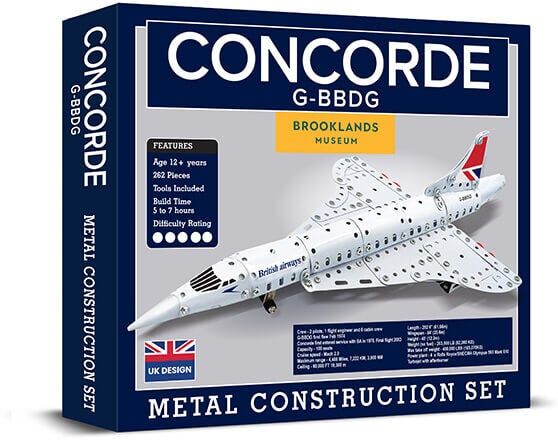
Coach House Partners Concorde Metal Construction SetRecreate one of the most extraordinary achievements in aviation history with the Coach House Partners Concorde Metal Construction Set. Developed in association with Brooklands Museum, Weybridge, this detailed model represents British Airways Concorde G‑BBDG, which took its maiden flight in February 1974. Concorde was a British‑French turbojet aircraft capable of flying at over twice the speed of sound, transforming long‑distance travel by cutting transatlantic flight times to just a few hours. This construction set captures the sleek proportions and distinctive design that made Concorde an enduring symbol of innovation and luxury air travel. Comprising 269 precision‑engineered stainless‑steel pieces, the set offers a challenging and rewarding build for those who enjoy detailed modelling projects. Clear, colour step‑by‑step instructions guide the process, while the included specialist tools ensure everything needed is ready to use. With an estimated build time of five to seven hours, this is a satisfying project that results in an impressive display model. Designed for teenagers and adults, the set also supports the development of fine motor skills, patience and basic mechanical understanding. Parental guidance is recommended. Finished model dimensions: 14(H) x 24(W) x 52(D) cm. Recommended age: 12+.24,99 £*Shipping: 3,50 £Secure redirect to the provider
-
Coach House Partners Tractor Metal Construction SetRecreate a familiar sight from rural life with the Coach House Partners Tractor Metal Construction Set. This detailed model celebrates the enduring role of the tractor in farming and agriculture, capturing the practical design and robust character of this essential working vehicle. The set includes 295 precision‑engineered stainless‑steel pieces, with the main body finished in a traditional green colour for an authentic appearance. Clear, colour step‑by‑step instructions guide you through the build, while the included specialist tools ensure everything needed is ready to use from the outset. Once completed, the model makes a compact and characterful display piece. With an estimated build time of two to four hours, this construction set offers a satisfying hands‑on project for teenagers and adults who enjoy detailed modelling. It also supports fine motor skills, patience and basic mechanical understanding. Parental guidance is recommended. Finished model dimensions: 12(H) x 12.8(W) x 29(D) cm. Recommended age: 12+.24,99 £*Shipping: 3,50 £Secure redirect to the provider
-
Coach House Partners Delorean Metal Construction SetRecreate one of the most instantly recognisable cars in automotive and film history with the Coach House Partners DeLorean Metal Construction Set. Originally produced in the early 1980s and designed by Giorgetto Giugiaro, the DeLorean is famed for its gull‑wing doors, brushed stainless‑steel body panels and its iconic role as the time machine in the Back to the Future film trilogy. This detailed construction set allows builders to assemble a faithful metal replica of the legendary car using high‑quality stainless‑steel components. Clear, colour step‑by‑step instructions guide the build, while the included specialist tools ensure everything needed is ready to use from the outset. The finished model captures the DeLorean’s distinctive shape and futuristic character, making it a standout display piece once complete. With an estimated build time of three to five hours, this set offers a rewarding hands‑on project for teenagers and adults who enjoy detailed modelling and iconic design. It also supports fine motor skills, patience and basic mechanical understanding. Parental guidance is recommended. Recommended age: 12+.24,99 £*Shipping: 3,50 £Secure redirect to the provider



-
What is equilibrium density gradient centrifugation?
Equilibrium density gradient centrifugation is a technique used to separate particles or molecules based on their density. In this method, a sample is layered on top of a density gradient medium, such as sucrose or cesium chloride, and then centrifuged at high speeds. As the centrifuge spins, the particles in the sample move through the density gradient until they reach a point where their density matches that of the surrounding medium, resulting in a banding pattern. This allows for the separation and purification of different components based on their density. **
-
What is a simple experiment about centrifugation?
A simple experiment about centrifugation can involve separating a mixture of water and sand. First, mix the water and sand in a test tube. Then, place the test tube in a centrifuge and spin it at a high speed. The centrifugal force will cause the sand particles to settle at the bottom of the test tube, while the water will remain on top. This demonstrates how centrifugation can be used to separate substances of different densities. **
-
How does the separation process of centrifugation work?
Centrifugation works by using centrifugal force to separate substances of different densities in a mixture. When the mixture is spun at high speeds in a centrifuge, the denser components move towards the bottom of the centrifuge tube, while the lighter components move towards the top. This allows for the separation of the different components based on their density. After the spinning is complete, the separated components can be easily collected from their respective positions in the tube. **
-
What is a simple experiment on the topic of centrifugation?
A simple experiment on centrifugation can be done using a mixture of water and sand in a test tube. By spinning the test tube in a centrifuge, the heavier sand particles will settle at the bottom due to centrifugal force, while the lighter water will remain on top. This demonstrates how centrifugation can be used to separate mixtures based on their density. Students can then observe and analyze the separated components to understand the principle of centrifugation. **
Can liquid metals be separated from each other by centrifugation?
Yes, liquid metals can be separated from each other by centrifugation. Centrifugation works by applying centrifugal force to a mixture, causing the components to separate based on their density. Since different metals have different densities, they can be separated from each other using centrifugation. This process is commonly used in metallurgy and metal refining to separate different metals from each other. **
Can someone tell me the steps of cell fractionation by density gradient centrifugation with explanation?
Cell fractionation by density gradient centrifugation involves several steps: 1. Homogenization: The first step is to break open the cells and release their contents. This is typically done using a homogenizer or sonicator to disrupt the cell membranes. 2. Centrifugation: The homogenized cell suspension is then centrifuged at a low speed to remove large debris and unbroken cells. This step separates the homogenate into different fractions based on size and density. 3. Density gradient formation: A density gradient solution, such as sucrose or cesium chloride, is prepared and layered in a centrifuge tube. The gradient is formed by layering solutions of increasing density from the bottom to the top of the tube. 4. Centrifugation: The cell homogenate is then layered on top of the density gradient and centrifuged at high speeds. During centrifugation, the different cellular components separate based on their density and form distinct bands within the gradient. **
Top-Angebote
Products related to Centrifugation:
-
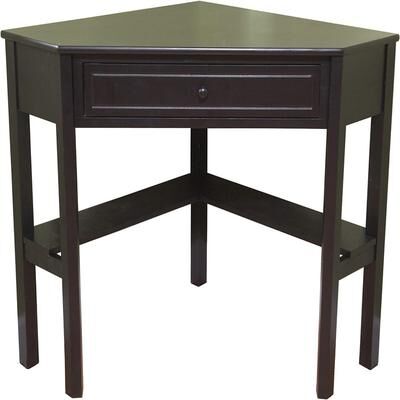
No Marketing Systems Wood Corner Desk"The corner desk measures 42"" X 28"" X 30"" And Weighs 42 lbs. Arrives with only minimal Assembly required. Comfortably fitting in any home, studio, apartment, and office, The small corner writing desk maximizes space in compact rooms."258,89 $*Shipping: 0,00 $Secure redirect to the provider
-
Coach House Partners Spitfire Metal Construction SetCelebrate one of Britain’s most iconic aircraft with the Coach House Partners Spitfire Metal Construction Set. Designed as a detailed, hands‑on build, this model pays tribute to the legendary Spitfire, a symbol of British engineering and aviation history. With 285 precision metal components, this construction set offers a rewarding build that balances challenge with clarity. Clear, colour step‑by‑step instructions guide you through the process, while the included specialist tools ensure everything you need is close at hand. Once complete, the finished model makes an impressive display piece, showcasing the distinctive shape and presence of the original aircraft. Ideal for teenagers and adults alike, this set encourages patience, problem‑solving and practical engineering skills. Expect a build time of around three to five hours, making it a satisfying project rather than a quick assembly. Finished model dimensions: 11(H) x 40(W) x 35(D) cm. Recommended age: 12+ (parental guidance advised).24,99 £*Shipping: 3,50 £Secure redirect to the provider
-
Coach House Partners Concorde Metal Construction SetRecreate one of the most extraordinary achievements in aviation history with the Coach House Partners Concorde Metal Construction Set. Developed in association with Brooklands Museum, Weybridge, this detailed model represents British Airways Concorde G‑BBDG, which took its maiden flight in February 1974. Concorde was a British‑French turbojet aircraft capable of flying at over twice the speed of sound, transforming long‑distance travel by cutting transatlantic flight times to just a few hours. This construction set captures the sleek proportions and distinctive design that made Concorde an enduring symbol of innovation and luxury air travel. Comprising 269 precision‑engineered stainless‑steel pieces, the set offers a challenging and rewarding build for those who enjoy detailed modelling projects. Clear, colour step‑by‑step instructions guide the process, while the included specialist tools ensure everything needed is ready to use. With an estimated build time of five to seven hours, this is a satisfying project that results in an impressive display model. Designed for teenagers and adults, the set also supports the development of fine motor skills, patience and basic mechanical understanding. Parental guidance is recommended. Finished model dimensions: 14(H) x 24(W) x 52(D) cm. Recommended age: 12+.24,99 £*Shipping: 3,50 £Secure redirect to the provider
-
What is the difference between differential centrifugation and density gradient centrifugation?
Differential centrifugation separates particles based on their size and density by subjecting a sample to multiple rounds of centrifugation at increasing speeds. This method results in the formation of a pellet containing the heaviest particles at each step. Density gradient centrifugation, on the other hand, separates particles based on their buoyant density by layering a sample on top of a density gradient medium and subjecting it to centrifugation. This method results in the formation of distinct bands or layers of particles based on their buoyant density within the gradient medium. Overall, differential centrifugation separates particles based on their size and density, while density gradient centrifugation separates particles based on their buoyant density within a gradient medium. **
-
How does differential centrifugation work?
Differential centrifugation is a method used to separate different components of a cell or tissue sample based on their size, shape, and density. The sample is first homogenized to break open the cells and release their contents. The homogenate is then subjected to a series of centrifugation steps at increasing speeds, which causes the larger and denser components to sediment out first, followed by the smaller and lighter components. This process results in the separation of organelles and other cellular components into different fractions, which can then be further analyzed or used for various experiments. **
-
What is equilibrium density gradient centrifugation?
Equilibrium density gradient centrifugation is a technique used to separate particles or molecules based on their density. In this method, a sample is layered on top of a density gradient medium, such as sucrose or cesium chloride, and then centrifuged at high speeds. As the centrifuge spins, the particles in the sample move through the density gradient until they reach a point where their density matches that of the surrounding medium, resulting in a banding pattern. This allows for the separation and purification of different components based on their density. **
-
What is a simple experiment about centrifugation?
A simple experiment about centrifugation can involve separating a mixture of water and sand. First, mix the water and sand in a test tube. Then, place the test tube in a centrifuge and spin it at a high speed. The centrifugal force will cause the sand particles to settle at the bottom of the test tube, while the water will remain on top. This demonstrates how centrifugation can be used to separate substances of different densities. **
Similar search terms for Centrifugation
-
Coach House Partners Tractor Metal Construction SetRecreate a familiar sight from rural life with the Coach House Partners Tractor Metal Construction Set. This detailed model celebrates the enduring role of the tractor in farming and agriculture, capturing the practical design and robust character of this essential working vehicle. The set includes 295 precision‑engineered stainless‑steel pieces, with the main body finished in a traditional green colour for an authentic appearance. Clear, colour step‑by‑step instructions guide you through the build, while the included specialist tools ensure everything needed is ready to use from the outset. Once completed, the model makes a compact and characterful display piece. With an estimated build time of two to four hours, this construction set offers a satisfying hands‑on project for teenagers and adults who enjoy detailed modelling. It also supports fine motor skills, patience and basic mechanical understanding. Parental guidance is recommended. Finished model dimensions: 12(H) x 12.8(W) x 29(D) cm. Recommended age: 12+.24,99 £*Shipping: 3,50 £Secure redirect to the provider
-
Coach House Partners Delorean Metal Construction SetRecreate one of the most instantly recognisable cars in automotive and film history with the Coach House Partners DeLorean Metal Construction Set. Originally produced in the early 1980s and designed by Giorgetto Giugiaro, the DeLorean is famed for its gull‑wing doors, brushed stainless‑steel body panels and its iconic role as the time machine in the Back to the Future film trilogy. This detailed construction set allows builders to assemble a faithful metal replica of the legendary car using high‑quality stainless‑steel components. Clear, colour step‑by‑step instructions guide the build, while the included specialist tools ensure everything needed is ready to use from the outset. The finished model captures the DeLorean’s distinctive shape and futuristic character, making it a standout display piece once complete. With an estimated build time of three to five hours, this set offers a rewarding hands‑on project for teenagers and adults who enjoy detailed modelling and iconic design. It also supports fine motor skills, patience and basic mechanical understanding. Parental guidance is recommended. Recommended age: 12+.24,99 £*Shipping: 3,50 £Secure redirect to the provider
-
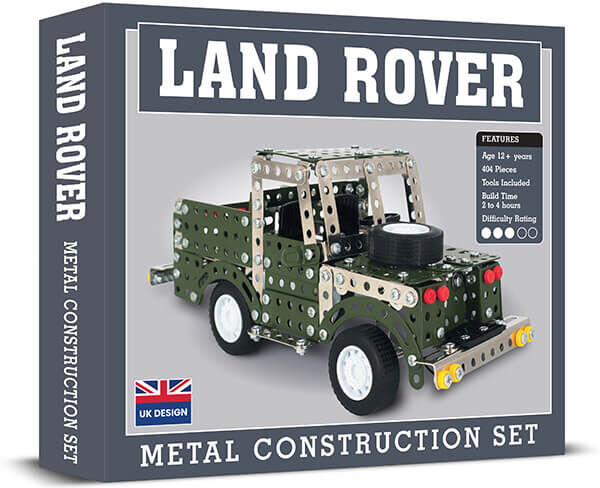
Coach House Partners Land Rover Metal Construction SetBuild a true automotive icon with the Coach House Partners Land Rover Metal Construction Set. First conceived by Maurice Wilks in 1947 and launched in 1948, the Land Rover became a benchmark for rugged, go‑anywhere 4x4 design. This detailed model celebrates the engineering heritage that made it a cornerstone of off‑road motoring. The set features 402 precision‑engineered stainless‑steel pieces, offering a hands‑on build that balances detail with approachability. Clear, colour step‑by‑step instructions guide you through the construction process, while the included specialist tools ensure everything needed is ready to use from the start. Once complete, the model makes a distinctive display piece that reflects the Land Rover’s unmistakable shape and utility‑driven design. With an estimated build time of two to four hours, this construction set is well suited to teenagers and adults who enjoy practical modelling projects. It also supports the development of fine motor skills, patience and basic mechanical understanding. Parental guidance is recommended. Finished model dimensions: 12(H) x 13(W) x 28(D) cm. Recommended age: 12+.24,99 £*Shipping: 3,50 £Secure redirect to the provider
-
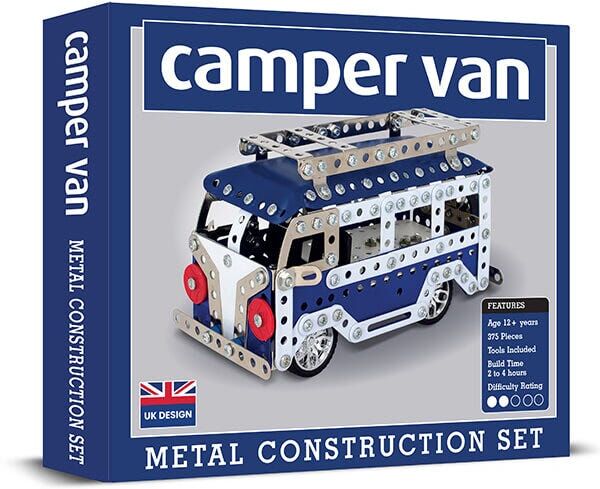
Coach House Partners Camper Van Metal Construction SetBuild an instantly recognisable holiday classic with the Coach House Partners Camper Van Metal Construction Set. This detailed model celebrates the enduring appeal of the camper van, an icon of travel, freedom and laid‑back adventure. The set includes 375 precision‑engineered stainless‑steel pieces, finished in a traditional blue and white colour scheme for an authentic look. Clear, colour step‑by‑step instructions guide you through the build, while the included specialist tools ensure everything needed is ready to use from the outset. Once complete, the model makes a charming display piece that captures the character of this much‑loved vehicle. With an estimated build time of two to four hours, this construction set offers a rewarding hands‑on project for teenagers and adults who enjoy detailed modelling. It also supports fine motor skills, patience and basic mechanical understanding. Parental guidance is recommended. Finished model dimensions: 11(H) x 10(W) x 18.7(D) cm. Recommended age: 12+.24,99 £*Shipping: 3,50 £Secure redirect to the provider
-
How does the separation process of centrifugation work?
Centrifugation works by using centrifugal force to separate substances of different densities in a mixture. When the mixture is spun at high speeds in a centrifuge, the denser components move towards the bottom of the centrifuge tube, while the lighter components move towards the top. This allows for the separation of the different components based on their density. After the spinning is complete, the separated components can be easily collected from their respective positions in the tube. **
-
What is a simple experiment on the topic of centrifugation?
A simple experiment on centrifugation can be done using a mixture of water and sand in a test tube. By spinning the test tube in a centrifuge, the heavier sand particles will settle at the bottom due to centrifugal force, while the lighter water will remain on top. This demonstrates how centrifugation can be used to separate mixtures based on their density. Students can then observe and analyze the separated components to understand the principle of centrifugation. **
-
Can liquid metals be separated from each other by centrifugation?
Yes, liquid metals can be separated from each other by centrifugation. Centrifugation works by applying centrifugal force to a mixture, causing the components to separate based on their density. Since different metals have different densities, they can be separated from each other using centrifugation. This process is commonly used in metallurgy and metal refining to separate different metals from each other. **
-
Can someone tell me the steps of cell fractionation by density gradient centrifugation with explanation?
Cell fractionation by density gradient centrifugation involves several steps: 1. Homogenization: The first step is to break open the cells and release their contents. This is typically done using a homogenizer or sonicator to disrupt the cell membranes. 2. Centrifugation: The homogenized cell suspension is then centrifuged at a low speed to remove large debris and unbroken cells. This step separates the homogenate into different fractions based on size and density. 3. Density gradient formation: A density gradient solution, such as sucrose or cesium chloride, is prepared and layered in a centrifuge tube. The gradient is formed by layering solutions of increasing density from the bottom to the top of the tube. 4. Centrifugation: The cell homogenate is then layered on top of the density gradient and centrifuged at high speeds. During centrifugation, the different cellular components separate based on their density and form distinct bands within the gradient. **
* All prices are inclusive of VAT and, if applicable, plus shipping costs. The offer information is based on the details provided by the respective shop and is updated through automated processes. Real-time updates do not occur, so deviations can occur in individual cases. ** Note: Parts of this content were created by AI.